
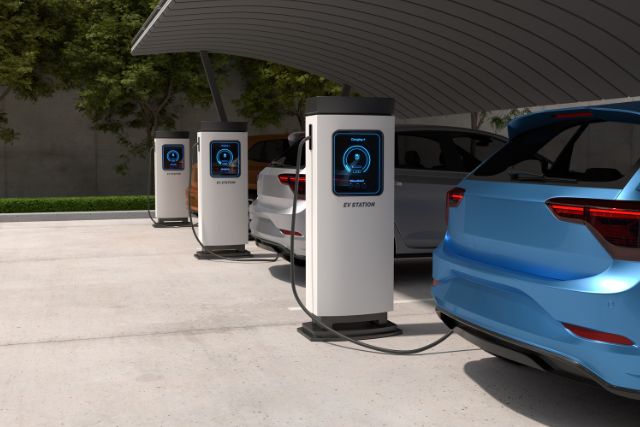
As part of Denver’s commitment to energy conservation, all new residential and commercial construction must install EV-friendly parking spots. Single-family homes must install at least 1 EV-ready parking space, and multifamily residential facilities and commercial facilities with more than 10 parking spaces must install at least 5% ESS or EV parking. There are some exceptions for small-scale renovations, but all new garages must be future-proof and ready to meet the needs of electric vehicles. In addition to compliant electrical systems and sprinkler systems, you must familiarize yourself with EV charging station fire watch protocols.
In addition to your general building permits, you’ll need to obtain an EV docking permit from the City and County of Denver before installing EV and ESS systems. This is to ensure you’re installing compliant electrical, emergency disconnects, fire suppression systems, and clearance between charging stations. Even when designed for smaller modes of transportation, such as e-bikes and e-scooters, stations must be at least 18 inches apart. If you have greater than 8kW or more than 15 cubic feet of lithium-ion batteries, you must also obtain an operating permit.
Fire Watch Protocols for EV Systems
Due to the increased risk for thermal runaway, charging stations are a high fire hazard. As such, fire monitoring must begin without delay when your fire sprinklers or fire suppression system is down. However, you can’t just staff a team member. You must assign someone who is trained and certified in fire watch. This is a significant change to your Fire Safety Plan, as you may have previously had a 4-hour window and the ability to staff a team member, if the system was down and hot work wasn’t required.
- For scheduled repairs or maintenance to your plumbing, electrical, or fire safety system, you must secure a certified monitor before work begins.
- For unplanned outages and repairs, immediately dispatch a third-party partner, and have a team member provide continuous monitoring until a trained and certified monitor arrives. If non-urgent, schedule repairs after you’ve secured a monitor.
Key Changes to Your Fire Safety Plan
Your EV-certified installation contractor will advise on required electrical components, compliant sprinklers, and specialized detection systems for indoor EV charging incidents. You must also update your Fire Safety and Emergency Evacuation Plans, keeping the following factors in mind.
- Train your parking attendants, property managers, and relevant team members on your EV technology.
- Train your maintenance team on lithium-ion battery risk factors.
- Install lithium fire extinguishers (Class 4-A, 20-B:C) 20 feet from docks.
- Install and maintain mandatory disconnect labels or signage.
- While not currently mandated, consider installing off-gassing sensors.
- Immediately notify the Denver Fire Department when “off-gassing” occurs.
- Consider how an EV incident may impact your evacuation plan.
- Identify certified third-party partners for repairs and battery removal.
- Identify a third-party partner familiar with EV charging station fire watch protocols.
Read more:
- Server Room Fire Watch in Denver
- Fire Watch Patrol Frequency in Denver and The Springs
- How to Keep Compliant Fire Watch Logs
- DFPC-Compliant Fire Watch Services in Denver
- Unique Consideration For High-Rise Fire Watch
EV-Compliant Fire Watchers in Denver and The Springs
You need to know who to call when the need for fire monitoring occurs. Scout Security has you covered! Our team is trained and certified, and aware of how to identify and respond in the event of off-gassing, charging station malfunction, and other ignitions.
Add our number to your third-party emergency contact list so you know who to call. We’re available 24 hours a day.