Key points:
- Safety protocols before hot work begins.
- How many floors to patrol in multi-level buildings.
- Standard protocols for monitoring and patrolling.
If your commercial or residential building is in a multi-level building, you’ll need to complete multi-level patrols during hot work. This means you’ll need to reach out to the property manager or business owners on at least the floor above and beneath you. Incident-specific and building-specific risk factors dictate the extent of high-rise building hot work and fire watch. Compliance may vary by incident.
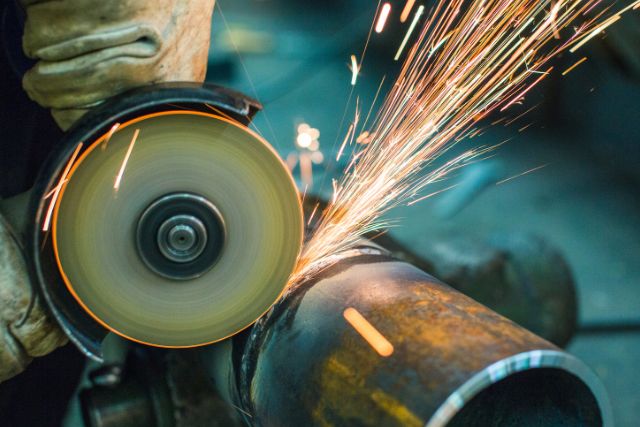
Hot work is defined as repairs, maintenance, construction, and any work that induces high-heat, smoke, flame, sparks, or slag. This includes, but is not limited to, welding, grinding, power-cutting, soldering, and induction brazing. Fire codes, insurance, and OSHA require continuous monitoring of the work, compliant patrols, and logging.
Fire Safety Before Hot Work Begins
The contractor performing your hot work can’t serve as your continuous monitor. Their focus must be on the work site. Before they can begin their work, your fire watcher will review your fire prevention and emergency response plans and gather information about the building, job, and risk factors.
- They’ll verify that your fire alarm and sprinklers are operational and ensure you have the proper fire extinguishers and fire suppression and safety tools.
- They’ll assess flammable materials, hazardous materials, and equipment that increase ignition risk. This includes nearby conveyor belts, cleaning supplies, server rooms, file rooms, etc.
- They’ll identify the most likely path of spread for smoke, sparks, flames, and heat. This includes moving through flooring, walls, vents, trash chutes, etc.
- Heavy machinery and flammable materials must be relocated to create a minimum 35-foot perimeter. In wind or high-fire risk conditions, the exterior perimeter extends to a minimum of 50 feet.
- If heavy machinery is stationary or can’t be relocated outside of the perimeter, it must be powered down, covered with fire blankets, or separated by smoke curtains.
- If hazardous flammable materials can’t be moved outside of the perimeter, they must be covered with fire blankets.
- Fire extinguishers and other suppression equipment must be moved within the perimeter.
Read More:
- EV Charging Station Fire Watch Protocols in Denver
- Unique Considerations for High-Rise Fire Watch
- 3 Times Your Team Can’t Perform Fire Monitoring
- Office Conversion Fire Safety System Upgrades
- Server Room Fire Watch
Fire Safety During Hot Work in Multi-Level Buildings
In addition to monitoring the work site, at least 1 additional monitor must be dispatched to patrol the entire floor, and a minimum of the floor above and below. In high-risk scenarios (including historic buildings, properties with EV charging stations, and buildings with a server room) you may need to patrol the entire building.
During high-rise building hot work, you must staff enough firewatchers to patrol the entire area at least every 15 minutes. Patrols must continue for a minimum of 30 minutes to monitor for delayed ignition, 60 minutes to 3 hours in historic buildings and high-risk scenarios.
Notifying Other Tenants
You must notify commercial and residential tenants before hot work begins and ensure your monitor has the access required for compliance. In some instances, you may need to delay work while fellow tenants make appropriate privacy and security precautions. This may include dispatching their own monitors.
High-Rise Building Hot Work Fire Monitors in Denver
Scout Security provides trained and certified fire guards for hot work monitoring and all other high-fire-risk scenarios. We can work solo or with your team and can be prescheduled or dispatched for emergency services.
Reach out today to book our team!