Key points:
- Why torch-on roofing is a preferred choice for flat roofs.
- Unique considerations when conducting hot work on rooftops.
- Why you are liable if you conduct outdoor hot work on Red Flag days.
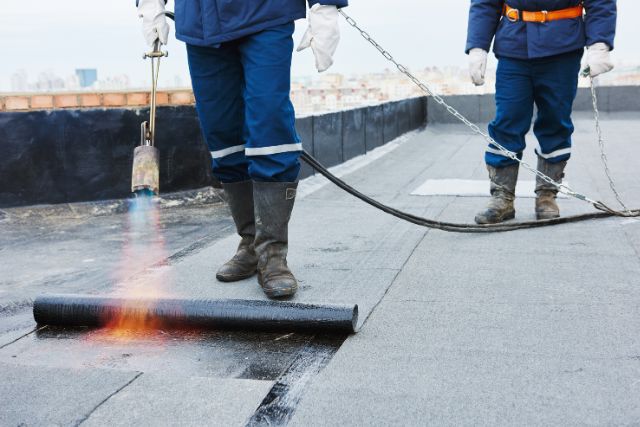
Torch down roofing is a top choice for high-rise commercial and residential buildings with flat rooftops. These multi-layer roofs create a durable foundation that allows technicians to walk on the roof without damage. They provide high-altitude UV resistance and create a seamless seal to withstand rain, ice, and heavy snow loads. Choose from options that meet the new Colorado Wildfire Resilience Code (CWRC) for fire resistance. Fire watch for torch down roofing has a few unique considerations. Here’s what you need to know.
Standard hot work fire watch requires a minimum of 2 people, but rooftop torching and hot work often require more than 2 people. Especially if the roof has a bit of a slope. Pre-schedule your roofing projects and adjust your schedule during Red Flag days.
How to Conduct Torch Down Roofing Fire Watch?
Fire watch standards vary greatly when conducting spark and flame-inducing work on rooftops. Like all hot work, 1 person must conduct continuous monitoring of the torch work. Where to position additional monitors, and how many additional monitors are required, varies greatly on the project.
If you begin your roofing project on a low fire risk day, ensure that your monitors receive real-time alerts from the National Weather Service so that you can cease work as soon as a Red Flag alert is issued.
The factors below help you determine how to maintain compliance.
- Position your continuous monitor downwind for a better view of traveling sparks.
- If the roof is large or has an elevator, deck, or vents, an additional monitor may be required on the roof.
- If the roof has combustible components, such as a wooden deck, it must be covered with fire blankets, and you may require a second monitor.
- If the roof is sloped, an additional monitor is required on the ground.
- If the roof has non-ember-resistant vents or drains, at least one monitor must be dispatched to patrol the building interior.
- It’s highly recommended to complete thermal sweeps at the end of all roof torching and hot work to identify hidden ignitions.
- If a Red Flag alert is issued after you begin working, cease work, clearly document your end time, and complete a thermal sweep and extended monitoring. Remove roofing supplies from the roof or secure them in a manner that they can withstand high wind conditions.
Read More:
- Fire Watch Protocol Updates in Denver What Smoke Control Rational Analysis Means for Denver Builders
- EV Charging Station Fire Watch Protocols in Denver
- Why Construction Fire Watch Impacts the Entire Community
- 5 Times to Staff Fire Guards, Even When They Aren’t Required
- Pros and Cons of Dispatching Internal Fire Watch Personnel to Denver Apartments
Can You Install Torch-On Roofing on Red Flag Days
Fire watch for torch down roofing minimizes your risk and liability on low fire risk days, but not on Red Flag days. The high winds increase the likelihood of carrying sparks. If a spark from your work ignites fire on a Red Flag day, the Fire Marshall will find you legally responsible—even if you were conducting compliant fire monitoring. Your insurance policy won’t cover your negligence, as most policies include a Red Flag Exclusion clause.
Reschedule roofing projects and monitor weather conditions throughout the day. If a repair is emergent, complete a short-term patch that doesn’t require hot work.
Third-Party Fire Watch for Torch Down Roofing in Denver
If your roofing or construction company requires additional monitors for upcoming projects, Scout Security has you covered. Pre-schedule us for complex projects or dispatch us same day when you’re short-staffed.
Book now or add us to your emergency contact list.