Key points:
- How to set your fire monitor up for success.
- What information to provide before they arrive.
- What information to provide after they arrive.
If it’s your first time dispatching a fire monitor, you may not be sure how to set them up for success. Although trained and certified in detection, suppression, and response, each business, event, and scenario is unique. The tips below help you set your monitor up for success.
In some circumstances, you can deploy an internal team member to perform fire watch. Be mindful that they must perform their duties continuously. Unless monitoring hot work, they may take quick bathroom breaks, but they cannot take a full lunch break or engage in non-monitoring activities. Hot work must be monitored continuously, and typically requires 2 monitors, 1 for patrol and 1 to watch the hot work.
When Possible, Schedule in Advance
We understand that emergencies arise, but when possible, pre-schedule your monitoring. This allows you to share most of the information below, getting your monitor up to speed before they arrive. The information below also determines how many people to dispatch for compliance.
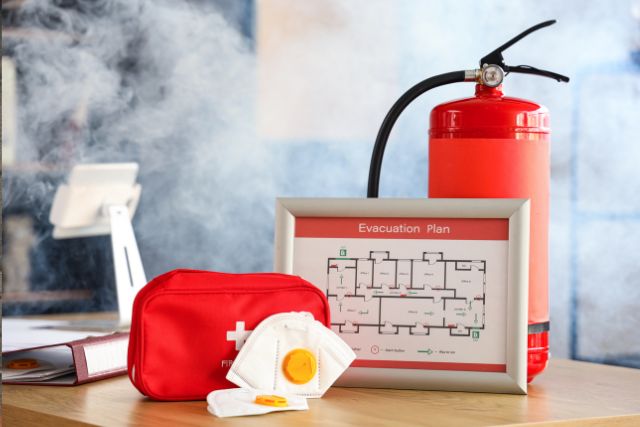
Share Your Emergency Response Plan
Arm your monitor with the information they need to succeed. For example, knowing where you store your cleaning supplies and other flammable materials helps tailor their proactive plan and emergency response if emergencies arise.
This includes but is not limited to:
- Emergency response plan
- Expected occupancy
- Entrances and exits
- Evacuation route
- Location of day-to-day fire hazards
- Location of fire extinguishers
- Location of other suppression equipment
- Industry-specific considerations
- Point of contact
Share Your Current Fire Hazard
The type of fire watch required guides the duration of monitoring and frequency of patrol. So, let your fire monitor know if your fire alarm is down, sprinklers are down, hot work is required, or any other need for monitoring arises.
Your industry, day-to-day fire hazards, and why you dispatched a monitor also influence how many people to dispatch. For example, multi-story buildings, large buildings, buildings with sleeping tenants (including hospitals and medical facilities), and large events require at least 2 monitors.
Assemble Additional Fire Safety Equipment
It’s wise to keep at least 1 additional fire extinguisher from each class of extinguishers your business requires on site. This way, you can reposition an extinguisher or two to high-risk areas, without removing required extinguishers during times of high fire risk.
Depending on your daily hazards, you may also want to invest in suppression curtains, blankets, an axe or sledgehammer, and other response and evacuation tools. Maybe a dolly or cart to reposition equipment and hazardous materials.
Read More:
- Fire Watch Patrol Frequency in Denver and The Springs
- How to Keep Compliant Fire Watch Logs
- DFPC-Compliant Fire Watch Services in Denver
- Unique Consideration For High Rise Fire Watch
Provide a Tour and Accessibility
Assign a team member who is familiar with your facility and emergency response plan to provide a tour of your business, event, or facility. To complete compliant patrols, you may need to provide access to employee-only and restricted areas where the general public isn’t permitted. Feel free to provide an escort for sensitive areas, but the escort must not restrict fire watch job duties.
Compliant Fire Monitor in Denver and The Springs
Scout Security dispatches same-day and pre-scheduled fire monitoring in and around Denver and The Springs. We provide compliant monitoring and patrol, and advise on how to take the most proactive approach.
Book now, or add us to your 24/7 emergency response list!