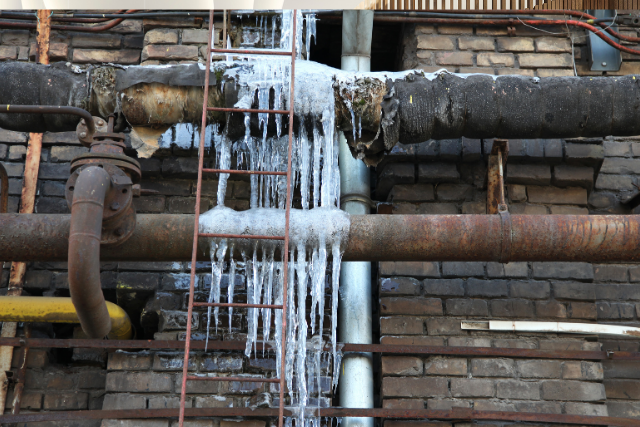
- Freezing temperatures can compromise commercial fire suppression systems and increase the risk of burst pipes.
- When systems go down, the fire marshal requires continuous fire watch until systems are fully operational.
- There must be enough fire watchers to physically patrol every level of the building, site or property in full every 15, 30, or 60 minutes, depending on compliance factors.
- Your fire monitor must complete NFPA-compliant patrol logs, which are increasingly digital and monitored in real time by the DFD.
Sub-zero temperatures strain plumbing lines and fire life-safety systems. A single burst pipe or frozen backflow preventer valve instantly compromises an entire facility’s fire suppression capabilities. When this occurs, the Denver Fire Department and NFPA codes require the immediate implementation of compliant fire monitoring. Here’s how to take a proactive approach to the top causes of cold weather fire watch.
1. Frozen Lines and Burst Pipes
Burst pipes are one of the top triggers for emergency winter fire watch. At the top of this list are main water lines, but even dry-pipe systems can fracture. Dry-pipe systems are standard in unheated spaces like loading docks and parking structures. These systems produce condensation that can build up and freeze. Wet-pipe systems in uninsulated riser rooms, exterior wall cavities, and warehouse mezzanines can freeze solid when temperatures drop.
Minimize this risk by upgrading interior and exterior insulation. To maintain NFPA 25 compliance, riser room temperatures must not drop below 40 degrees Fahrenheit. Monitor temperature daily in the winter and install compliant heating if required.
2. High-Risk Temporary Heating
Temporary heating solutions help keep outdoor staging areas and freight bays comfortable. Before adding heating, you must ensure you select a compliant solution. A certified electrician can advise on your heating options, placement, and installation.
Be mindful of the factors below before installing winter heating solutions:
- Permits: You’ll need a permit before you can install or use seasonal heating.
- Clearance: Ceiling clearance and combustible perimeters vary by risk factors.
- Heating source: Infrared heaters are a top choice, but you may be allowed propane or gas.
- Electrical load: Have a certified electrician ensure there’s no extension cord crosslinking and that the electrical grid isn’t overloaded.
- Fire extinguisher: Place a compliant fire extinguisher within 30 to 50 feet of each temporary heating source.
3. Complete Daily Rounds to Inspect for Fire Risk Factors
Even if you’re well insulated and your temporary heaters are installed properly, conditions can change in an instant, creating the need for cold weather fire watch. Your basement or riser room heating could malfunction, or a temporary heater could be moved without your knowledge.
Performing daily rounds and keeping a digital log of temperatures and compliance factors helps you alert risks before they become a compliance concern. For example, you might only log riser room temperatures once a week in the spring and summer, but daily in the fall and winter.
Cold Weather Fire Watch in Denver and The Springs
Reach out to Scout Security the next time you require pre-scheduled or emergency fire watch!
Frequently Asked Questions
Can my maintenance staff or security guards conduct fire watch?
Who can perform fire watch in Denver varies by risk factors. When in doubt, contact the fire marshal. Regardless of who performs fire watch, monitoring must be continuous and uninterrupted.
How many fire watchers are required when a pipe bursts or my fire safety system is down?
You need enough monitors to fully patrol all floors in 30 minutes for most circumstances. For high-risk conditions, every 15 minutes. In some instances, unoccupied buildings can be patrolled once every 60 minutes.